
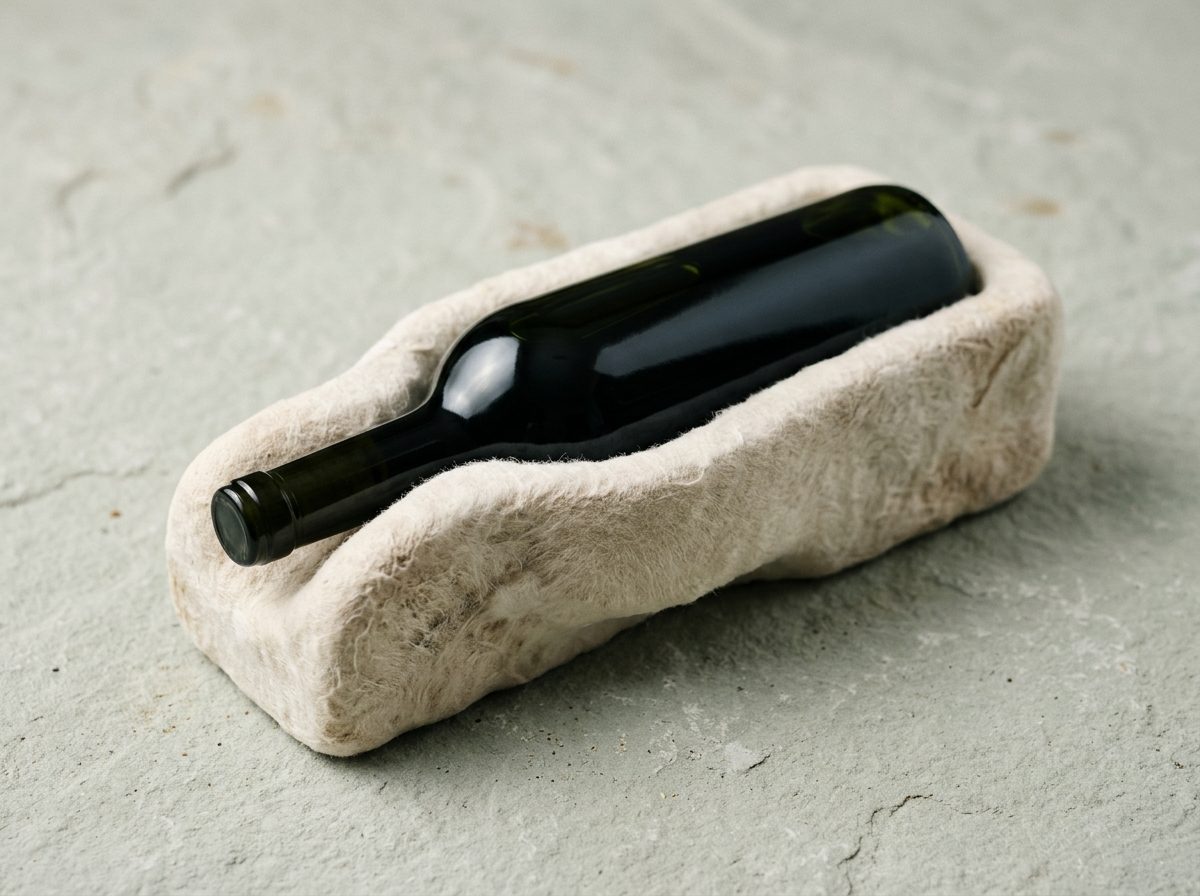
Brands in the UAE and wider Gulf want sustainable packaging that still looks premium and protects glass, fragrance and electronics in the heat. Mycelium packaging does that. But growing it locally is a different matter. This post looks at the real cost drivers with public numbers, and explains why buying from Dharaksha in India usually costs less than making it in the UAE.
Key takeaways
- DEWA charges industrial users 0.23 to 0.38 AED per kWh plus a fuel surcharge. That is close to India, so power is not the main reason to import.
- Mycelium needs a steady supply of crop residue. The UAE has little; India has an estimated 228.5 million tonnes of surplus a year.
- Industrial water in Dubai costs 7.70 to 10.12 AED per cubic metre plus a surcharge, and mycelium growing uses water for steam and humidity.
- Under CEPA, the UAE offers zero duty on 97% of its tariff lines, covering 99% of Indian exports by value.
- Mundra to Jebel Ali takes a median of about 8 days.
What it takes to make mycelium packaging
Mycelium packaging is grown. Crop residue is chopped, sterilised with steam, inoculated with culture, incubated in moulds at controlled temperature and humidity, then dried. Each step needs substrate, energy, water, people or all four. A plant also needs clean rooms, tooling and months of tuning before yields are stable.
Electricity in Dubai vs India: an honest comparison
DEWA’s industrial tariff is 0.23 AED per kWh for the first 10,000 kWh a month and 0.38 AED above that, plus a fuel surcharge of 0.06 AED per kWh and 5% VAT (DEWA slab tariff).
In Haryana, the HT industrial energy charge is ₹6.95 per kVAh, unchanged for 2026-27 (Hindustan Times). All in, industrial users pay about ₹8 to ₹9.5 per unit, or about 0.31 to 0.37 AED.
So a large plant in Dubai pays a little more per unit than we do, but not dramatically more. The bigger differences are substrate, water, cooling and capex. Incubation rooms must hold a steady temperature, and in a Gulf summer that means a heavy cooling load.
Substrate: the UAE’s real constraint
Mycelium needs large, steady volumes of agricultural residue such as straw and husk. The UAE is arid and grows little of it, so a local plant would have to import substrate, store it and manage quality and contamination risk.
India has the opposite problem. The National Biomass Atlas estimates about 228.5 million tonnes of surplus agricultural biomass a year (NIBE, National Biomass Atlas of India). We buy crop residue from farmers, which gives them income from their harvest leftovers. Dharaksha has processed more than 7,000 tonnes of agri-residue to date. Our homepage puts it simply: zero feedstock constraint.

Water and labour
Steam sterilisation and humid incubation use water. DEWA’s industrial water tariff runs from 7.70 to 10.12 AED per cubic metre, plus a 1.10 AED surcharge (DEWA slab tariff).
On labour, the UAE has no single national minimum wage, but factory staffing carries visa, housing and transport costs. In Haryana the statutory minimum for unskilled work is ₹585.41 per day from April 2026 (Haryana Labour Department gazette).
Automation: consistent quality at scale
Most mycelium is artisanal. Ours is industrial. Dharaksha runs a closed-loop, automated production line in Faridabad, with in-house machines that automate the process from sterilisation to liquid culture inoculation. Each step is instrumented, each batch is reproducible and each SKU has tolerances.
Against where we started, the line uses 60% less manpower and one third of the energy, and our rejection rate is below 10%, down from 55%. For a Gulf brand, that means every insert fits the bottle or device the same way, every finish matches, and supply can scale for Ramadan, Eid and year end gifting peaks.

Capex and time to scale
Building mycelium capacity takes money and time. Belgian maker Permafungi invested €2.5 million in a single new line in 2025 (Après-demain). A UAE plant would need the same sterilisers, clean rooms, dryers and tooling, plus extra cooling, and then a ramp-up before yields settle.
Dharaksha’s 27,000 sq ft plant is already running with more than 100 people, and we have added 8,000 sq ft of assembly space for finished packs.
UAE vs Faridabad cost comparison
| Cost driver | UAE (Dubai) | Dharaksha, Faridabad |
|---|---|---|
| Industrial electricity | 0.23 to 0.38 AED/kWh plus 0.06 surcharge | about 0.31 to 0.37 AED/unit all-in |
| Substrate | Little local crop residue | 228.5 Mt/yr surplus, bought from farmers |
| New capacity | Plant build, cooling and ramp-up | Plant running, assembly expansion done |
| Import duty | n/a | CEPA: zero duty on 97% of UAE tariff lines |
| Sea freight | n/a | about 8 days Mundra to Jebel Ali |
CEPA: duty free trade with India
The India-UAE Comprehensive Economic Partnership Agreement entered into force on 1 May 2022. India’s Department of Commerce says the UAE offers zero duty on 97% of its tariff lines, covering 99% of India’s exports by value (Department of Commerce, CEPA FAQs). Confirm your HS code and certificate of origin with your broker.
Lead time and freight carbon, honestly
Lead time. The UAE is very close to India by sea. Schedules show a median of about 8 days from Mundra to Jebel Ali, with the fastest around 5 days (SchedulesMCP lane data). Nhava Sheva to Jebel Ali has a median of about 15 days. That makes repeat orders easy to plan.
Freight carbon. Under GLEC Framework defaults, large container ships emit about 7.6 g CO₂e per tonne-km (EcoFreight summary of GLEC v3.2). Over roughly 2,000 km that is around 0.015 kg CO₂e per kilo of cargo, a very small share for light packaging.

What UAE brands get from Dharaksha
- India’s largest mycelium packaging manufacturer, on an automated, scale-ready line.
- Premium packs for gifting: mycelium inserts with kappa luxury boxes, honeycomb board and outer cartons.
- Cold chain for the heat: ParaChill ice boxes have a k value of 0.032 W/m·K against 0.0365 for EPS, holding cold about 20% longer.
- Home compostable, with under 1% breakage for glassware and jarred foods.
- Free samples for qualified projects.

Frequently asked questions
Usually, yes. Dubai power is close to India’s rate, but the UAE has little crop residue for substrate, industrial water is costly and a new plant needs millions in capex plus cooling.
Under CEPA, the UAE offers zero duty on 97% of its tariff lines, covering 99% of Indian exports by value. Confirm your HS code with a broker.
Schedules show a median of about 8 days from Mundra to Jebel Ali and about 15 days from Nhava Sheva.
Our ParaChill ice boxes insulate better than EPS, and inserts are drop tested for glassware and jars. Ask us for a sample to test in your own conditions.
Yes. We export across the Gulf. Tell us your destination port and we will quote.
Related reading
Import costs in other markets
Work with Dharaksha
Get a UAE quote for mycelium packaging
Send your product, volumes and destination port. We will reply with a free sample plan and a quote from our automated plant in Faridabad.
Leave a Reply